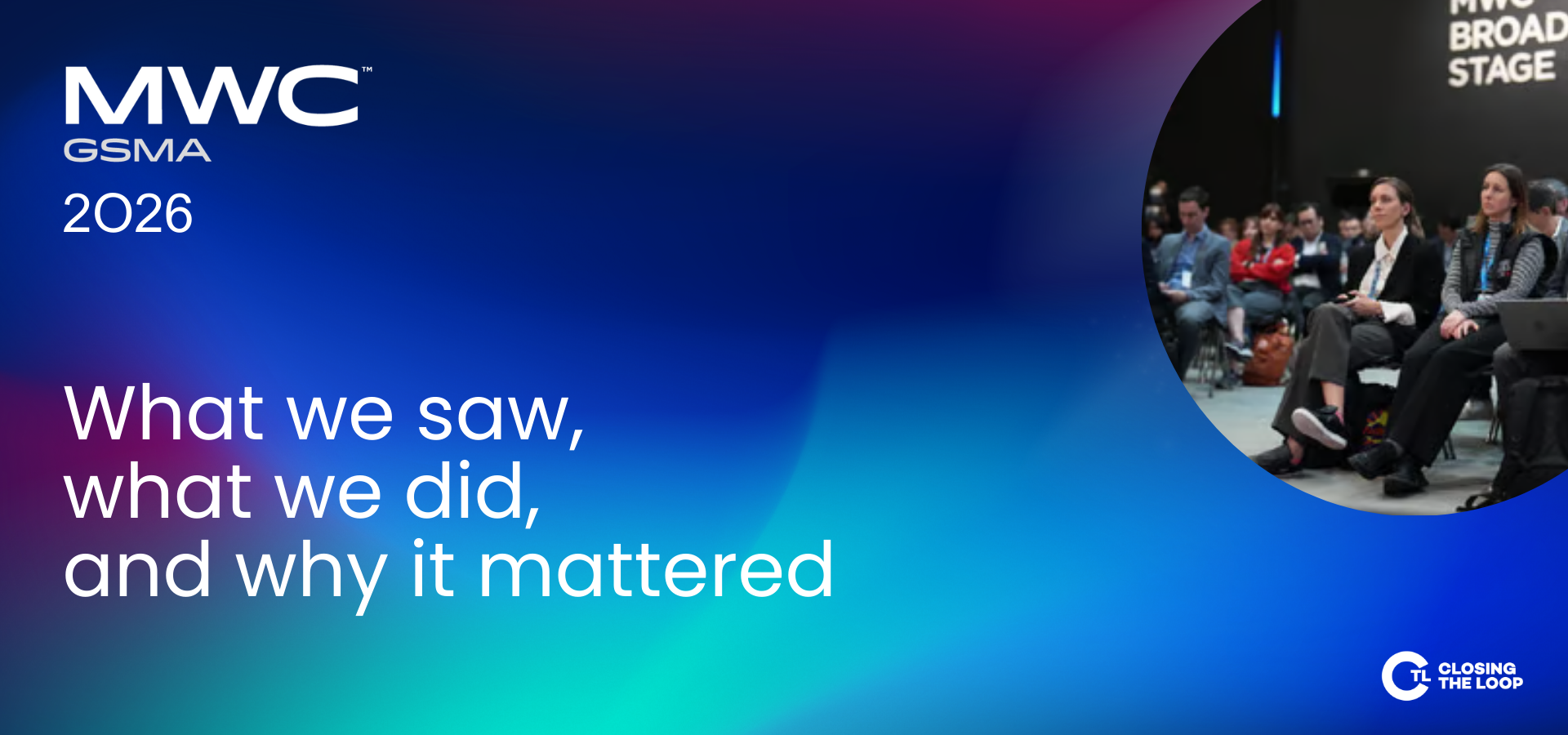
MWC 2026 has come and gone, leaving plenty to unpack. Two forces stood out in shaping the future of the telecom industry:
AI is accelerating technological transformation, while circularity and sustainability are steadily becoming structural market drivers.
Through our participation in panels, partnerships and discussions across the week, these are Closing the Loop’s key insights into how the telecom ecosystem is evolving.
Sustainability is becoming a business driver
Across panels, product launches and industry collaborations, the conversation increasingly focused on how the telecom ecosystem can reduce emissions, extend device lifecycles and embed circular thinking into business strategies.
At the GSMA session “How Green is Your Bottom Line?”, speakers discussed how sustainability is shifting from compliance to a core business and investment driver. Industry emissions have declined year on year since 2019 — an early sign that the sector’s sustainability commitments are translating into measurable progress.
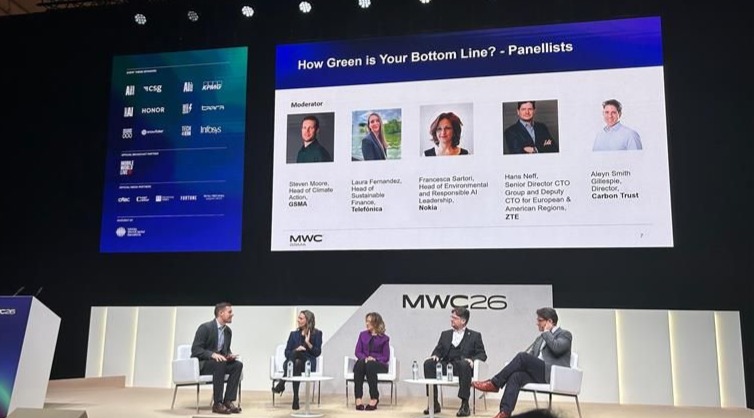
However, with most telecom emissions sitting in the supply chain, future progress will depend on collaboration between operators, vendors and technology partners. Operators such as Telefónica also showed how sustainability is increasingly embedded in business strategy through network modernisation, energy efficiency improvements, and operational cost reductions while vendors including Nokia and ZTE Corporation emphasised that future networks, including 6G, must embed sustainability by design.
Looking ahead, speakers highlighted the need for standardised circularity metrics to measure impact more consistently and provide clearer benchmarks across the industry. Accelerating climate action will require continued innovation, collaboration and better measurement across the ecosystem.
The circular mindset shift is underway
The discussion on refurbished devices at the GSMA Insights Hub opened with a simple but revealing question: ‘’’Would you buy a used phone?’’
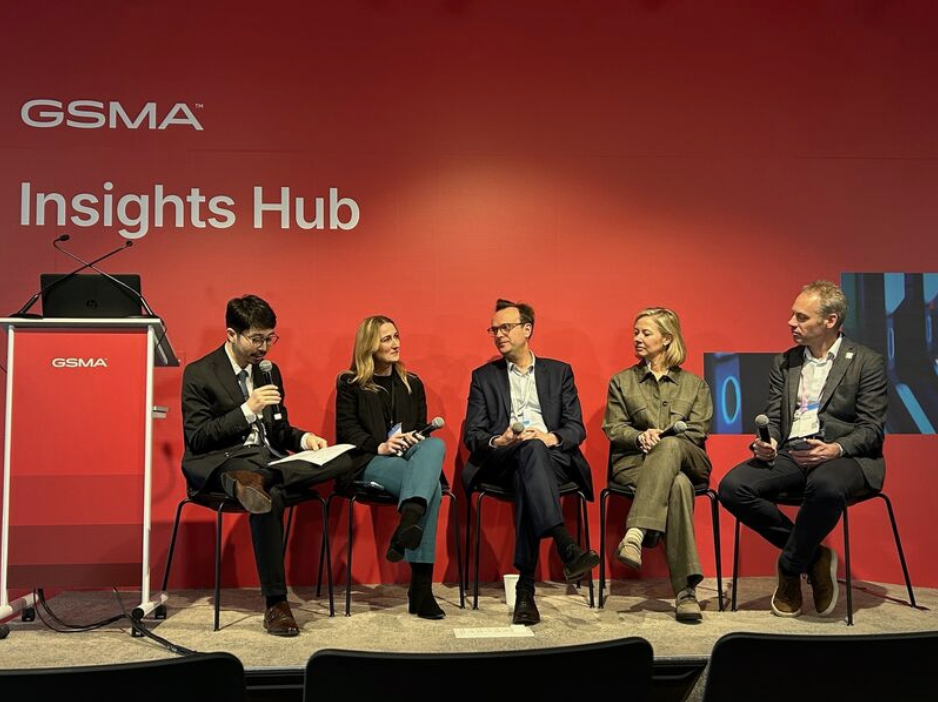
Research presented by CCS Insight showed that price remains the primary driver for refurbished purchases, while sustainability is viewed positively but rarely acts as the initial trigger.
At the same time, demand is growing, particularly among younger consumers. Speakers from Recommerce Group pointed to strong interest from younger generations seeking premium devices at more accessible prices.
However, trust remains critical for wider adoption and further market growth. Clear guarantees around data wiping, stronger repair ecosystems and transparent device labelling were highlighted as key to increasing consumer confidence. Markets such as France already show that when standards and trust mechanisms mature, adoption follows.
Repairability and modularity are gaining visibility
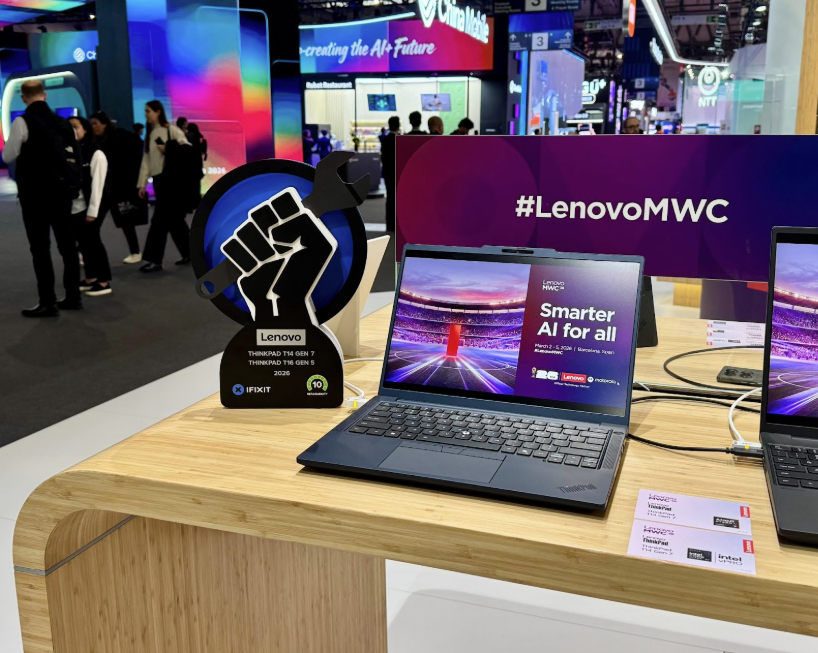
Another theme across the exhibition floor was device longevity. Several companies showcased innovations aimed at extending hardware lifecycles, including a repair-focused ThinkPad developed by Lenovo in collaboration with iFixit, which achieved a 10/10 repairability score.
The serviceable-by-design approach involves several updates that make the systems easier to open up, more straightforward to navigate with improved part layouts and labeling, and much simpler to repair or upgrade, thanks to modular parts and manufacturing tweaks. Visitors could also see a modular smartphone prototype from Tecno Mobile, while Fairphone continued to showcase devices, including the new Gen6 phone, built around repairability and longevity.
While these innovations remain niche, rising device prices and supply chain pressures are likely to extend replacement cycles, increasing demand for devices that are easier to repair, upgrade and maintain.
Industry recognition for sustainability is growing
Beyond product launches and panel discussions, these shifts are also beginning to take shape in industry collaboration and recognition.
During the week, Closing the Loop signed a Memorandum of Understanding (MoU) with GSMA Industry Services to explore how circular solutions can support telecom operators and technology providers in strengthening customer propositions.
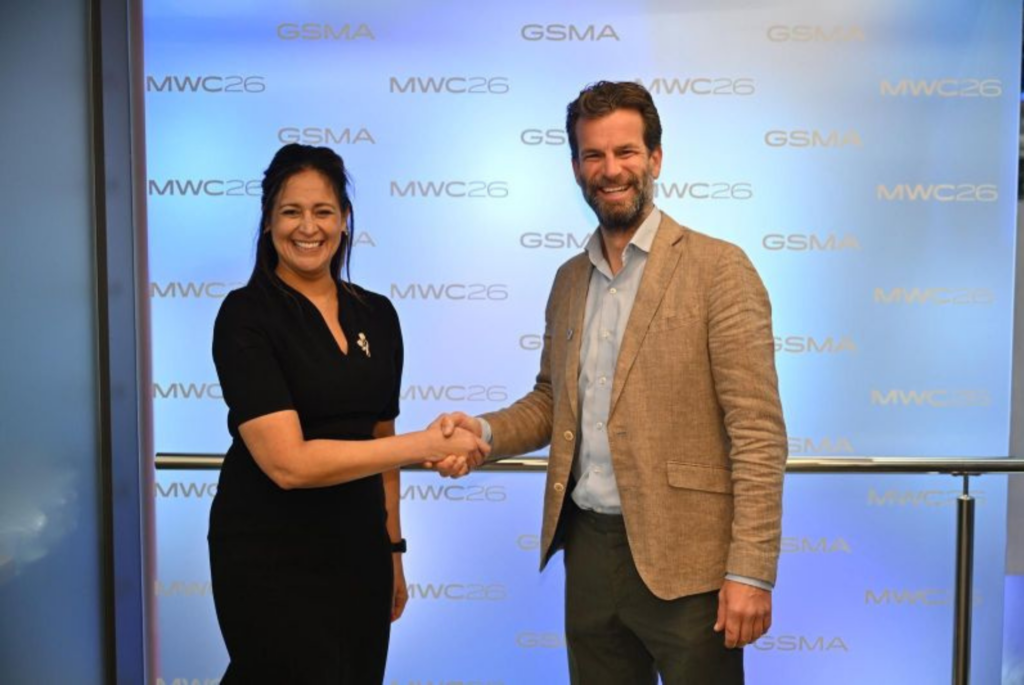
As part of this collaboration, Closing the Loop’s CMO, Ana Maria Alvarez, joined a GSMA Industry Services panel at MWC to discuss how circular services can be integrated into mainstream telecom propositions, making them accessible to operators across the ecosystem. A key message from the discussion was the importance of simplicity and flexibility in scaling circularity: our One for One service is designed to be easily embedded into existing commercial models — whether through device sales, bundles or subscriptions — making circularity practical and accessible.
At the same time, industry recognition for sustainability is evolving. This year’s GLOMO Awards introduced Marketing for Good as part of the Marketing Excellence category, recognising campaigns that combine audience engagement with measurable impact.
This signals a broader shift: sustainability is increasingly becoming a source of business value, with solutions moving beyond impact alone to play a role in how telecom propositions are structured, positioned, and differentiated. Closing the Loop was honoured to be nominated alongside Vodafone Germany in this category for the One for One campaign.
A look to the future
Together, these signals show that the shift towards a more circular and sustainable telecom industry is already underway. What lies ahead is ensuring that technological innovation and circularity reinforce each other, as the networks, devices and digital services of the future will not only need to be smarter and faster — but also more sustainable by design.
We look forward to continuing the conversation.
See you at MWC 2027.