Closing the Enterprise Device Circularity Gap through Lifespan Extension and E-Waste Reduction
The Ambition
Circular action can take many forms. As part of its broader portfolio of services and approaches to help the tech industry and its customers consume better, Google developed ChromeOS Flex—software that gives new life to unsupported Windows and Apple computers. This already addresses a critical issue: devices that are still functional at the hardware level risk becoming obsolete, or effectively “bricked,” once software support ends.
While ChromeOS Flex already offers a clear and technical solution, for many users, installing a new operating system remains complex or unfamiliar. Google saw an opportunity to further strengthen its impact by improving how the software is brought to users and making the solution even more impressive. The challenge was no longer just about enabling device reuse, but about how to promote and distribute that solution in a way that increases adoption, reduces friction, and reinforces the broader sustainability narrative.
The Service
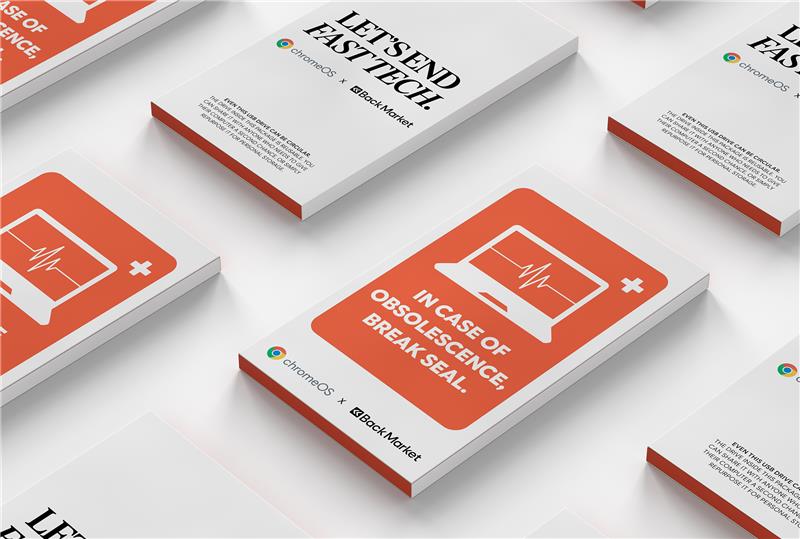
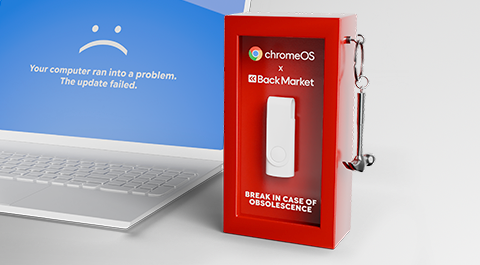
Google wanted to make it clear that ChromeOS Flex helps reduce electronic waste, while making the benefits of the operating system accessible to users globally. To address this, Google complemented the software’s free online offering with a physical distribution model: a ChromeOS Flex USB kit, made available via refurbished electronics marketplace Back Market. These USB drives simplify installation, lowering the barrier for user adoption.
Where many solutions would stop at distribution, Google aimed to extend the impact further—both in terms of environmental outcome and communication. To do so, it integrated Closing the Loop’s waste compensation service into every USB drive produced. As a result, the drives do not only help extend the lifespan of existing laptops, but also directly contribute to the collection and responsible recycling of electronic waste in African countries.
The Result
Already several thousand USB drives have been sold or distributed. The combined weight of these drives determines the amount of electronic waste that Closing the Loop collects in countries such as Ghana. This ensures that the introduction of new hardware does not add to the global e-waste challenge while the model contributes to the creation of safe and formalized collection and recycling jobs in emerging markets.
At the same time, it adds a measurable circular component to Google’s initiative, linking device lifetime extension directly to waste reduction beyond the user’s own device.

"Every decision we make has an impact. Reuse and lifecycle extension are great ways to put circular thinking into action. But as every single product will at some point become waste, we feel it makes sense to match hardware added to the market with hardware being removed from the market. Closing the Loop offers an excellent approach to waste reduction."
Ted Briggs
Platforms & Devices Lead for Sustainability Strategic Partnerships