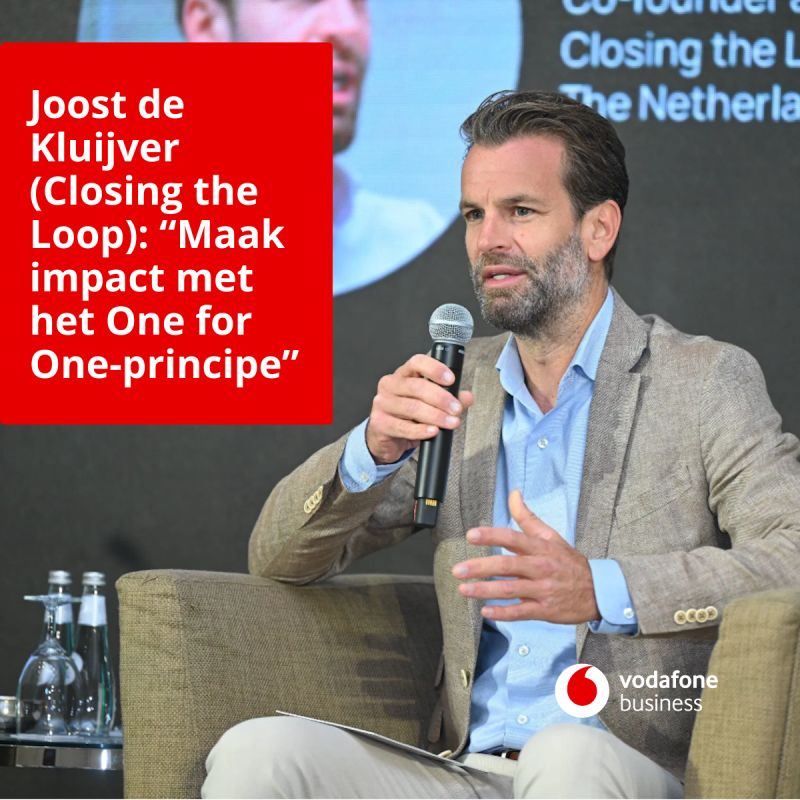
Electronic waste is the fastest-growing waste stream in the world. But for Joost de Kluijver, CEO of Closing the Loop, the real question is not only environmental. It is commercial. How do you make circularity work for customers, at scale?
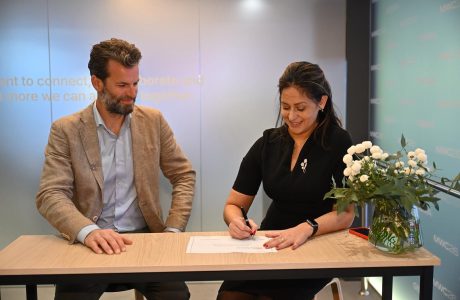
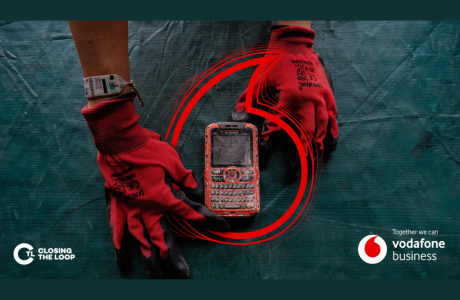
In his recent interview about our partnership with Vodafone Business, Joost explains how One for One helps Vodafone Business connect sales with impact for their clients, in a way that is both commercially attractive and easy to adopt.
First and foremost: simplicity
When asked what customers have to do to participate, Joost’s answer is extremely simple:
“Absolutely nothing happens to your phone. From a sustainability perspective, that may not sound like the strongest story. But from a customer perspective, it is..”

This is circularity as a service
It fits into existing procurement flows. It works within standard contracts. And it delivers an attractive story without adding operational burden.
As Joost explains:
“You have the Vodafone Business process of serving customers and delivering the best connection. And you have what we do: collecting, working with the informal sector, recycling. If you combine those two and turn them into one story, you get what you see now.”
For customers, that means:
• A simple add-on to existing mobile contracts
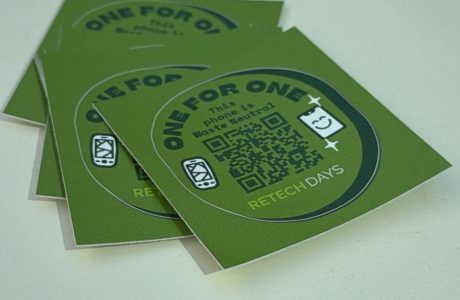
• A clear and measurable circular action per device
• A strong narrative for reporting and communication
• No additional workload for IT or procurement teams
Because the service is commercially attractive and easy to implement, adoption becomes realistic at enterprise scale. And scale is what makes the difference. Vodafone Business offers clients scalable impact, built around the customer experience
“Our business model is collecting on behalf of customers,” Joost says. “That service generates more revenue than the costs of collecting and processing the waste. That is why we designed this model: to make African waste collection profitable.”
There is no trade-off between business performance and circular action. The more devices sold with One for One, the more scrap devices are removed from waste streams. That’s what makes the impact scalable.
A small step with big impact
Joost summarises it clearly:
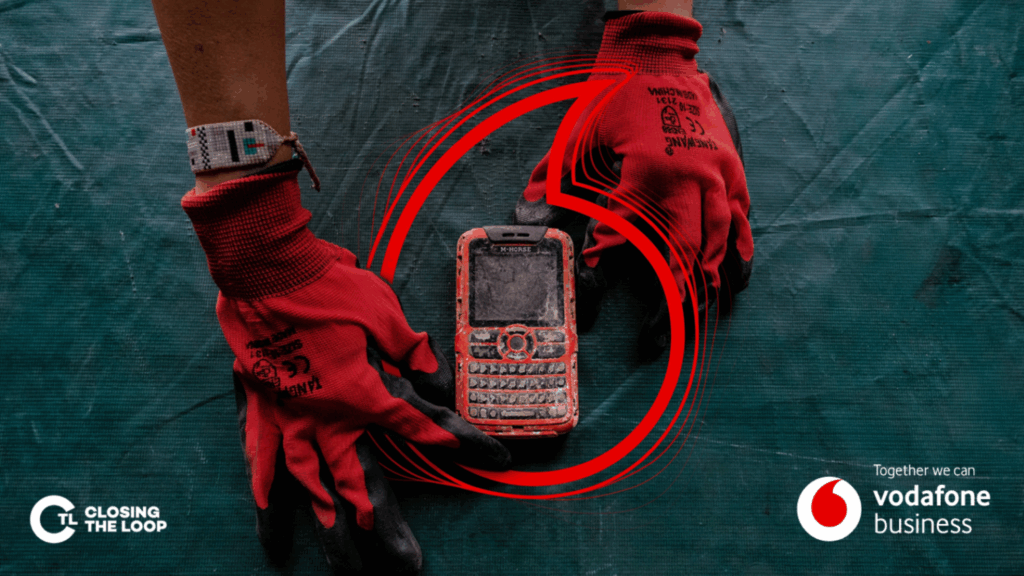
“With One for One, you can take action by making a small, simple step. Being sustainable does not always have to be complicated. Impact starts here with a small step.”
For companies looking to strengthen their circular strategy without redesigning their entire business model, this matters.
One for One proves that when circularity is designed around customer experience and commercial logic, impact becomes scalable by default.